
Outdoor Destinations That Spark Creativity and Writing Ideas
There’s a reason so many writers have left cities behind. There is something about the open air, about physical exertion, about the changing scene, that alters the action of the mind. You get ideas in a different way when you are going through a place than when you are sitting at a desk looking at a reading list. The writers who knew this lived close to the outdoors, and they used it with intention, returning to the same hills, coasts and forests until the landscape became part of their thinking.
Five places below have that quality. Each one shaped significant writing, and each one still rewards a visit for anyone who wants to arrive with a notebook and leave with something worth keeping.
What These Places Have in Common
None of the destinations below are scenic backdrops. They’re working landscapes – places where writers returned repeatedly, walked the same paths, and let familiarity do something that novelty can’t. The writing that came out of them is specific in a way that a single afternoon in a library rarely produces. The names of particular hills appear. The quality of a particular kind of afternoon light. The way a place behaves in one season versus another.
That specificity is what makes outdoor writing feel alive rather than composed. Anyone can start to develop it, even on a first trip – notebook in hand, phone in a pocket, moving slowly enough to actually notice things.
From Notes to Something Worth Reading
Coming back from a place with a notebook full of observations is one kind of work. Shaping those observations into something a reader can follow is another. The raw material is there – the detail, the feeling, the thing you noticed that nobody else did. Getting it into a structure with a beginning, a direction, and a reason to keep reading takes a different kind of effort.
The trick is to keep moving anyway: write one rough sentence, then another. Lower the stakes completely. Write about the light on the water, the sound of wind through the moorland grass, the exact colour of the path. Those who want a firmer structure from their gathered fragments might turn to PapersOwl to get that organised. Reliable accuracy from a writer who understands how to build something from observation is genuinely useful at that stage. Bit by bit, the fragments connect, and something worth reading starts to take shape.
The experience stays yours. The writing is just how you share it.
1. The Lake District, England
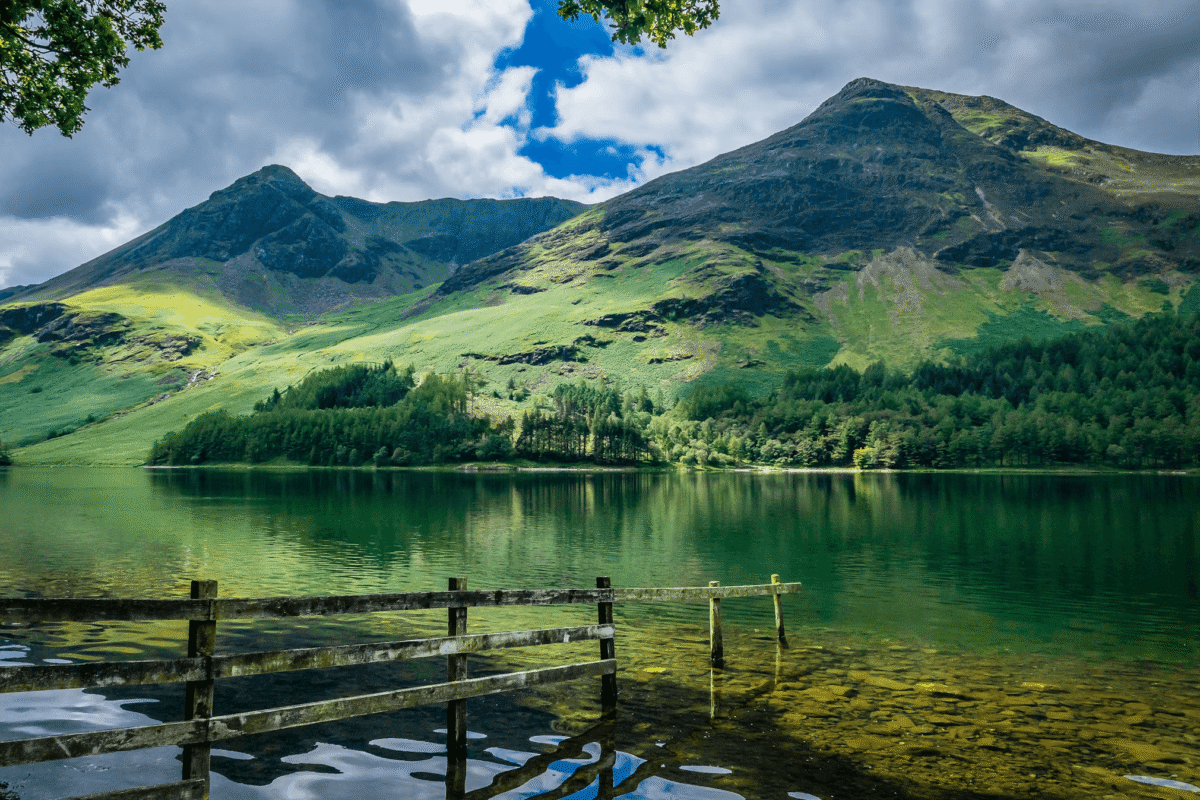
It is estimated that Wordsworth walked almost 180,000 miles in his lifetime, a large proportion of it on the hills around Grasmere and Rydal. This was the direct source of the Romantic idea of nature as a participant in, rather than a backdrop to, human existence. He wrote poems out loud while walking – the walking was part of the process.
Dove Cottage, where Wordsworth settled in 1799 and remained until 1808, is open to visitors and is within walking distance of numerous of the routes he routinely travelled. The circuit of Rydal Water, on a clear morning when the sun comes low across the fell, is the sort of thing that stays with you. Dorothy Wordsworth’s journals from the same period are worth reading before a visit – her descriptions are exact in a way that poetry sometimes isn’t. The colour of a sky at a particular hour. The state of particular trees. Specific, grounded, alive.
2. Walden Pond, Massachusetts
Henry David Thoreau spent two years, two months, and two days living in a small cabin he built himself at Walden Pond. The experiment produced by Walden, published in 1854 – one of the most direct accounts of what it feels like to slow down and pay close attention to a specific patch of land. Reading it now, what stands out is how much he actually enjoyed it.
The pond itself is a state reservation. The trail around the water takes about forty-five minutes and passes through the same mixed woodland Thoreau wrote about. In summer the water is warm enough to swim in. There’s something striking about standing at the marked site of his cabin – a small, quiet place, completely ordinary-looking, that produced one of the most read pieces of nature writing in American literature.
3. Haworth Moor, Yorkshire
The Brontës didn’t just live near the moors – the landscape was inseparable from how they imagined everything. Wuthering Heights is set on a version of the land immediately behind their home in Haworth, and Emily Brontë knew every path across it. The exposure, the wind, the sense of being far from anything organised – all of it is in the novel.
Beyond the village, the path to Top Withins crosses four miles of open moorland. The view from the ridge in low cloud or late afternoon light is one of the more affecting walks in England. It doesn’t feel like visiting a literary landmark – it feels like walking somewhere genuinely wild, which is probably why the writing it produced still reads that way.
4. The Camino de Santiago, Spain
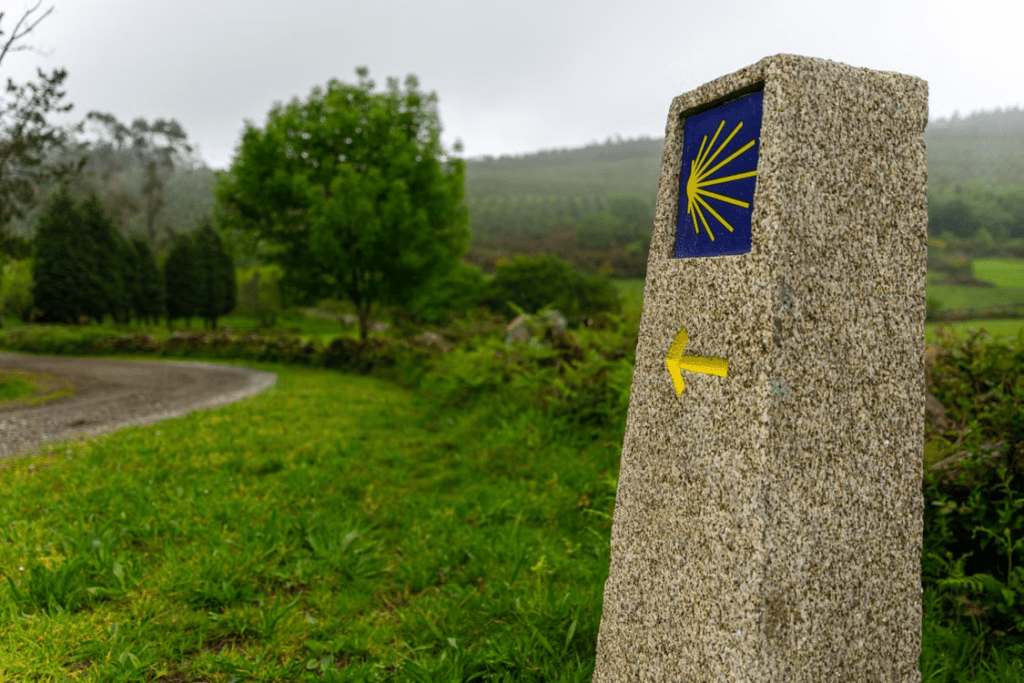
The Camino, according to research, is a special route. It has generated an exceptionally significant corpus of literature – memoirs, essays, fiction – by those who walked one of the routes and felt the need to make sense of what happened. The most widely read is Paulo Coelho’s The Pilgrimage, yet it is only a portion of what the trek has spawned. You want to write when you walk 780 km.
The French Way, from Saint-Jean-Pied-de-Port to Santiago de Compostela, takes around four weeks to complete. Walking 8-10 hours a day physically repeats itself, and puts you in a mental condition not produced by a desk. Ideas come and remain. “Things that looked complicated at the beginning of the day sometimes look different at the end of the day.
5. The Scottish Highlands
Robert Louis Stevenson walked extensively through the Highlands as a young man – the landscape fed directly into Kidnapped. John Muir, born in Dunbar, spent his childhood in the Scottish countryside before emigrating and becoming the defining voice of American wilderness writing. Something about this particular landscape seems to produce writers who think on a large scale.
The Highlands offer emptiness that’s unusual in Britain. The West Highland Way covers 154 kilometres through some of the most open terrain in the country. What the place gives a writer is proportion. The mountains are ancient and worn, and they make whatever is worrying you feel appropriately small. That shift in scale is useful in a way that’s difficult to replicate indoors.
How Writers Have Handled the Gap
Wordsworth let months pass between an experience and a poem about it. He called it “emotion recollected in tranquillity” – practical advice as much as anything poetic. Thoreau kept daily journals for decades before any of the material became Walden. The published book is a distillation of years of observation, not a direct transcript of a single stay.
Keep Your Voice Honest
The pieces that stay with a reader are rarely the ones with perfect descriptions. They’re the ones where something specific happened – the wrong turn that added two miles, the sudden change in weather, the moment the landscape looked nothing like expected. That honesty is what makes outdoor writing feel real rather than composed.
Practical Notes for Each Destination
| Destination | Best Season | Writer Association | Walking Distance |
| Lake District | April – October | Wordsworth, Dorothy Wordsworth | 5-15 km day walks |
| Walden Pond | May – September | Henry David Thoreau | 2.5 km circuit |
| Haworth Moor | May – October | Emily, Charlotte, Anne Brontë | 8 km to Top Withins |
| Camino de Santiago | April – June, September | Paulo Coelho and many others | 780 km full route |
| Scottish Highlands | May – September | R. L. Stevenson, John Muir | Varies widely |
Each place rewards returning to. A single visit gives you the surface. The second or third time is when you start to notice what wasn’t visible before – which is exactly what happens with writing.
Final Thought
The best reason to visit any of these places isn’t the literary connection – it’s the experience itself. Walking the same paths Wordsworth walked, sitting by the same pond Thoreau wrote about, crossing the same moorland the Brontës crossed in all weather – these things do something to how you see and think that no amount of reading about them quite replicates. Go with a notebook. Move slowly. Pay attention. The writing will follow.


No Comments Yet!
You can be first to comment this post!