
Scenic National Park Routes Perfect for Educational Trips
There’s a particular kind of learning that only happens when you’re standing inside the thing you’ve been reading about. A geology lecture lands differently when you’re looking at 277 miles of layered canyon. The history of Indigenous civilisations hits differently when you’re walking through the actual cliff dwellings.
National parks are the best field classrooms in the country. For college students – especially those studying environmental science, history, biology, or photography – they’re also some of the most underused resources available. And with an America the Beautiful Annual Pass at £63, the whole system is accessible for a fraction of what most people think.
Why This Matters For Students
Most people visit national parks as tourists. Students can visit them as researchers. The difference is intention – having a question before you arrive, and looking for evidence while you’re there.
A biology student studying invasive species has a reason to spend three hours in the Everglades. A history student interested in pre-Columbian cultures has a reason to sit in front of the cliff dwellings at Mesa Verde until the light changes. A geology student has a reason to hike the Bright Angel Trail at the Grand Canyon slowly, reading the rock layers like chapters in a textbook that took 1.8 billion years to write.
Planning Your Trip Around Your Drafts
Students who take national park trips seriously do a bit of preparation before they leave. Most parks have ranger-led programmes, Junior Ranger materials, and free guided walks that are genuinely dense with information – better than most campus lectures on the same subject.
People study across multiple subjects and often produce written work that benefits from firsthand observation. When a field trip generates more material than there’s time to write up, students looking for extra support can turn to EduBirdie and find expert guidance online. Having a professional perspective on how to structure field-based analysis is genuinely useful when you’re turning raw observation into written argument. That support lets you focus on being present in the place rather than anxious about what comes after.
The best national park trips feed directly into coursework. Plan it that way from the start.
Grand Canyon: Reading 1.8 Billion Years
The Grand Canyon is the most obvious choice for a reason. The exposed rock layers represent nearly half the age of the Earth and are among the most complete geological records visible from the surface anywhere in the world.
Bright Angel Trail descends through Kaibab Limestone at the rim, through Redwall Limestone, down to the Tonto Plateau of Tonto Group, and eventually to the Vishnu Schist at the river – 1.8 billion years old. Each band is a different era, a different climate, a different planet. Geology students have called it the closest thing to time travel that exists on foot.
Insider tip: The South Rim’s Yavapai Geology Museum has interactive displays that map exactly what you’re looking at from the rim lookout. It’s free and worth an hour before you hike.
Yellowstone: Where The Earth Is Alive
Yellowstone sits on top of one of the largest volcanic hotspots on the continent. The geothermal activity – geysers, hot springs, fumaroles – is the result of magma sitting unusually close to the surface. Old Faithful erupts approximately every 90 minutes. Grand Prismatic Spring gets its colours from heat-adapted microorganisms called thermophiles, the same category of organisms that scientists study when modelling what early life on Earth might have looked like.
For students in biology, environmental science, or even astrobiology, Yellowstone is a living laboratory. The park’s research permit programme allows students affiliated with universities to conduct fieldwork – worth checking if your department has existing relationships with the park.
Everglades: America’s Wetlands
The Everglades is the only subtropical wilderness in the US and one of the most ecologically complex environments in North America. It’s also one of the most threatened – water management, agricultural runoff, and invasive species (notably Burmese pythons, now estimated at over 100,000 in the ecosystem) have significantly altered the park over the last century.
For environmental science students, the Everglades is a case study in what happens when a large, interconnected ecosystem is disrupted at multiple points simultaneously. The park’s Anhinga Trail is the most accessible entry point – a short, flat boardwalk through freshwater marsh where wildlife density is extraordinary.
Mesa Verde: Architecture Built Into Cliffs
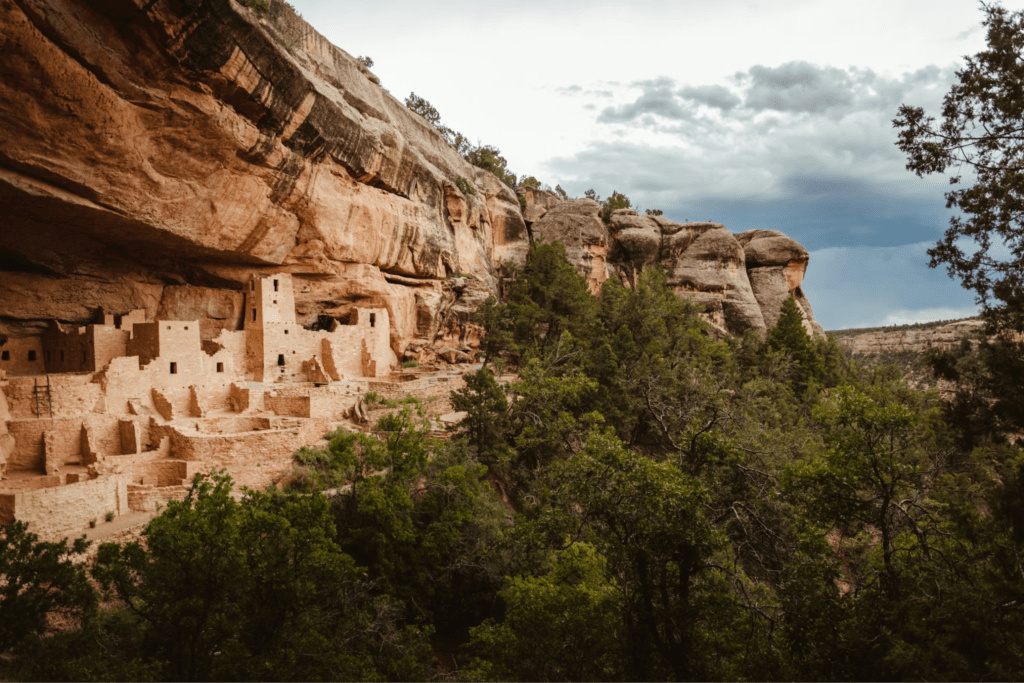
Mesa Verde in Colorado preserves over 5,000 Ancestral Puebloan archaeological sites, including Cliff Palace – the largest cliff dwelling in North America. The Ancestral Puebloans built multi-storey structures into the canyon walls between 600 and 1300 CE before abandoning the area in the late 13th century.
The reasons for that abandonment – drought, resource depletion, social factors – are still debated by archaeologists. That debate makes Mesa Verde particularly interesting for history and anthropology students. There’s no settled narrative, which means there’s actual research still being done.
Best for:
- Archaeology and anthropology students
- Native American history coursework
- Architecture and urban planning perspectives on pre-industrial settlement
When to go: Late spring and early autumn. Summer is crowded and hot. Many cliff dwelling tours require advance tickets.
Insider detail: The Wetherill Mesa area gets significantly fewer visitors than the Chapin Mesa area where Cliff Palace sits. Long House, accessible from Wetherill, is the second-largest cliff dwelling in the park and often has ranger-led tours with small groups.
Turning the Trip Into Something on Paper
Field trips generate material fast. Notes, photos, observations, half-formed ideas scribbled on a trail. For students applying to college, that raw experience can become exactly the kind of specific, personal story that admission essays are built around.
Admissions readers see thousands of generic essays. A piece grounded in a real moment – standing at the rim of the Grand Canyon at sunrise, or watching a Yellowstone geyser go off right on schedule – lands differently. Students who want to shape that experience into something strong often work with PapersOwl to get their admission essay done in a way that actually reflects who they are. That kind of support turns raw travel notes into a narrative that admissions committees remember. The trip gives you the story. The rest is just shaping it well.
Making It Budget-Friendly
Here’s what students consistently get wrong about national park trips: they assume cost is the main barrier. It usually isn’t.
- The America the Beautiful Pass (£63) covers all national parks for a year and is transferable between vehicles carrying the same group
- Most parks have free campground reservations through Recreation.gov – book 6 months in advance for popular sites
- Carpooling from campus splits fuel costs significantly; a 5-person car to the Grand Canyon from Phoenix costs less per person than a single restaurant dinner
- Many parks have free shuttle systems that eliminate parking costs entirely
The trip itself is affordable. What students underestimate is preparation time – booking, planning routes, and knowing what to look for before arrival. That preparation is what converts a scenic drive into an educational experience worth writing about.
Final Thought
National parks are already doing educational work. You just have to show up with the right questions. Pick a park that connects to something you’re actually studying this semester, book the campsite early, and treat the whole thing as a field study rather than a holiday.
The notes you take standing inside the Grand Canyon are worth more than anything you’ll read about it in a lecture hall.

No Comments Yet!
You can be first to comment this post!